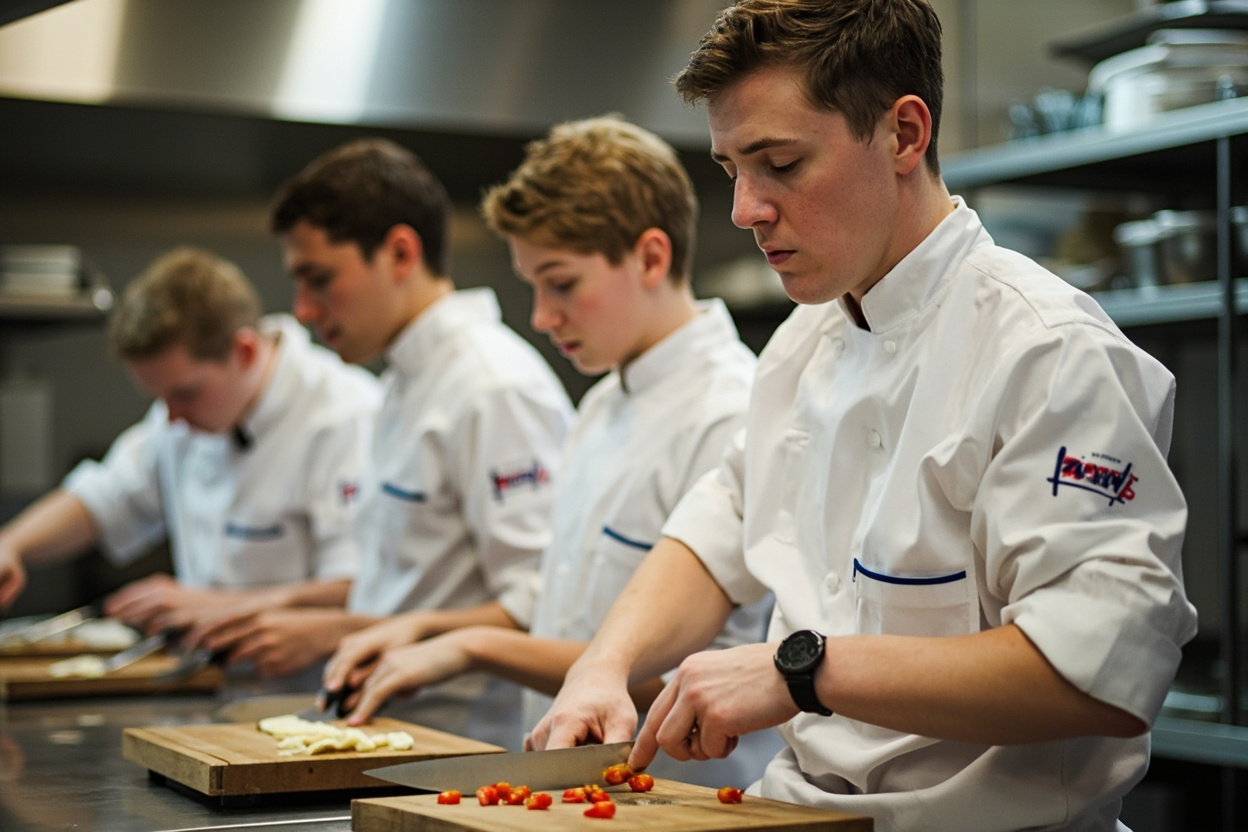
National Skills Week 2026 (24–30 August) is Australia's annual reminder that a university degree isn't the only path to a stable, meaningful career. This year's theme — "Life Changing" — is deliberately named. For the thousands of Australians who transitioned into aged care, disability support, and commercial cookery in the past three years, those words aren't marketing. They're a description of what actually happened. Clinton Institute (RTO 41597, CRICOS 03540C) is running open experience sessions throughout the week at its Community Training Kitchen in Melbourne.
Why the "skip university" conversation is louder in 2026 than ever
University offer rounds used to feel like the finish line. Now they feel like a starting block that might not even be pointing in the right direction.
In 2026, more Australians are questioning the return on investment for four-year degrees — especially when industries like aged care, disability support, and hospitality are screaming out for qualified workers. The data backs this up: Jobs and Skills Australia projects over 100,000 additional workers needed in aged and disability care by year's end. SEEK lists 4,220+ disability support worker vacancies right now. Commercial cookery qualified chefs appear on Australia's skilled migration shortage list.
Meanwhile, universities are raising fees. Graduate underemployment is rising. The messaging gap between "get a degree, get a job" and "get a skill, get a job" has never been wider.
National Skills Week exists to close that gap — and this year, Clinton Institute is making the case in person.
"Skills-based careers don't wait for economic conditions to improve. The need for qualified aged care workers, disability support workers, and skilled cooks exists right now — and it's structural, not cyclical. That's the kind of job security a university degree can't guarantee."
— Shane Batterson, CEO, Clinton Institute
Career 1: Disability Support Worker — jobs exist without a degree
The disability support sector has a problem: demand is growing faster than supply. The NDIS (National Disability Insurance Scheme) funds support for hundreds of thousands of Australians with permanent disabilities. Every one of those people needs qualified workers.
Yet vacancy rates remain high. Turnover is a challenge. Providers are competing for workers who hold the right qualification — the CHC33021 Certificate III in Individual Support.
Here's what most people don't know: you don't need prior experience. You don't need a health background. You don't need to be a certain age or have a certain ATAR. You need to be reliable, empathetic, and willing to learn. Clinton Institute's trainers — practitioners with real NDIS experience — will teach you the rest.
Key fact: 4,220+ full-time DSW jobs are advertised nationally right now (SEEK, August 2026). Major NDIS employers — Arcare, Opal Healthcare, Benetas, Estia — are all actively recruiting. Clinton Institute has placement partnerships with all of them.
Time to qualify: 6–12 months part-time. Monthly intakes. CRICOS approved (115261A).
Career 2: Aged Care Worker — the structural deficit nobody talks about
If disability support is the sector with a visibility problem, aged care is the sector with a staffing crisis that's been building for a decade.
Australia's population is ageing. The Productivity Commission's 2026 Report on Government Services confirms what providers have been saying for years: there aren't enough qualified aged care workers to meet current demand, let alone future need. This isn't a recession issue — it's a demographics issue, which means it's permanent.
The CHC43015 Certificate IV in Ageing Support qualifies you to work in residential aged care facilities, home care packages, and community care programs. With the government's increased focus on home care as an alternative to residential aged care, the sector is also generating new roles that didn't exist five years ago.
Clinton Institute's aged care students train in a simulated healthcare environment — not just a classroom. And work placement is arranged with Arcare, Opal Healthcare, and Benetas, so students graduate with employer relationships already in place.
Key fact: Structural worker shortage confirmed by Productivity Commission 2026. Not a trend — a permanent feature of the labour market.
Time to qualify: 6–12 months. CRICOS approved (115262M).
Career 3: Qualified Commercial Cook / Chef — WorldSkills quality, without the university price tag
The commercial cookery sector has a perception problem and a supply problem at the same time.
Perception: "It's just cooking." Reality: Commercial cookery is a technically demanding, internationally portable skill set. A qualified cook or chef can work in Melbourne, London, Dubai, or Singapore. The qualification is respected globally because the standard — set by WorldSkills — is consistent and demanding.
Supply: Chef apprentice completions have dropped significantly (employer incentives halved from $5,000 to $2,500 in recent budget changes). This means fewer qualified cooks entering the market — which means better job security for those who do qualify.
Clinton Institute's commercial training kitchen in Melbourne is aligned to WorldSkills 2026 cookery standards — meaning students train to international benchmarks, not just Australian minimum requirements. The SIT30821 Certificate III in Commercial Cookery is delivered by trainers with professional kitchen experience.
Key fact: Commercial cookery qualified chefs remain on Australia's skilled occupation list. The employer incentive reduction means fewer new entrants — creating more opportunity for qualified candidates.
Time to qualify: 12–18 months. CRICOS approved (110552J).
The National Skills Week 2026 offer: try before you commit
Clinton Institute is running open experience sessions throughout National Skills Week (24–30 August) at its Community Training Kitchen in Melbourne. These aren't sales presentations — they're hands-on sessions where you can:
- Try basic knife skills in a commercial kitchen
- Speak directly with trainers who've worked in the sector
- Learn about real entry requirements, real timelines, and real job outcomes
- Understand what the NDIS employer landscape actually looks like
No commitment required. No experience needed. Just show up with questions.
National Skills Week 2026 — Open Experience Sessions
Clinton Institute, Level 9, 313 La Trobe Street, Melbourne. Register your interest for National Skills Week open sessions now.
Register for National Skills Week →What parents should know about skills-based careers in 2026
If you're a parent watching September offer rounds approach with dread — wondering if your child is making the right choice, or any choice at all — this is for you.
The honest truth: university is right for some careers. But for aged care, disability support, and commercial cookery, a vocational qualification gets you to the job faster, cheaper, and with less risk. The average Certificate III costs a fraction of a three-year degree. The employment outcome — in a sector with structural worker shortages — is arguably more reliable.
That's not anti-university messaging. It's just the numbers.
National Skills Week is the perfect time to explore these options — together. Bring your child, or go yourself first and report back. Either way, Clinton Institute's Community Training Kitchen is open.
The three pathways at a glance
Here's how the three careers compare:
- Disability Support Worker — CHC33021 → 6–12 months → NDIS providers (Arcare, Opal, Benetas) → stable, growing sector
- Aged Care Worker — CHC43015 → 6–12 months → residential + home care → structural shortage confirmed
- Qualified Chef — SIT30821 → 12–18 months → hospitality sector → internationally portable qualification
All three are delivered at Clinton Institute's Melbourne campus. All three have work placement components. All three are on Clinton's CRICOS scope for international students.
Ready to find out more?
This article draws on labour market data from Jobs and Skills Australia, vacancy data from SEEK, the Productivity Commission Report on Government Services 2026, and National Skills Week official guidance.
National Skills Week runs 24–30 August. Clinton Institute's Community Training Kitchen open sessions are happening throughout the week. Register your interest now — spots are limited.
For parents: if your child is uncertain about what comes after Year 12, this week is worth an hour of your time. No sales pitch. Just real careers, real pathways, and real people who made the switch.